


Varicose veins of the legs are a pathology that causes the thinning of the venous walls, the deformation (dilation, elongation) of the blood vessels, and the interruption of blood flow.In the absence of timely treatment, the disease can lead to a variety of complications, disability and death.The following material describes in detail the stages of varicose veins of the legs, their symptoms and clinical signs, as well as methods of treating the disease.
Reasons for appearance
According to statistics, more than 60% of women and about 50% of patients of the stronger sex suffer from varicose veins of the extremities in varying degrees of severity.
There are many reasons that are the trigger for the development of the disease.Key factors include:
- Hereditary predisposition.A genetically determined connective tissue defect is one of the most common causes of the disease.Manifested by weakness of the vascular walls.
- Gender (women are more susceptible to varicose veins).Experts associate the appearance of the disease with changes that occur in a woman's body in different periods.Pregnancy, childbirth, menopause are conditions accompanied by weight gain, changes in hormone levels and deformation of blood vessels.
- Excess body weight, which impedes the flow of blood in the veins, is a reason that increases the risk of developing the disease by 5 times in women of childbearing age.
- Nutritional characteristics.The lack of vitamins and vegetable fibers interrupts the natural regeneration of the venous walls.
- Limit physical activity.Blood pooling in the lower extremities is often caused by lack of movement and prolonged sitting.Professions that involve "standing" work (surgeon, chef) also represent a high risk factor.
- Inflammatory diseases arising in the pelvic organs, endocrine disorders, heart and central nervous system diseases, flat feet.
- Injuries to the bones and soft tissues of the legs.
In addition to the above, significant factors are also: the age of a person (the decrease in the elasticity of blood vessels is genetically determined by the aging process), the presence of bad habits.
Tight clothes, uncomfortable shoes with very high heels, regular weight lifting, taking hormonal drugs - all of the above reasons can also cause the described disease.
Symptoms of varicose veins
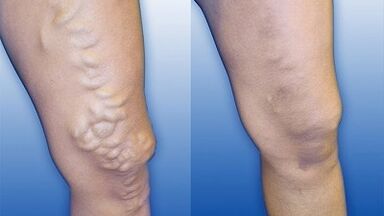
Signs of the disease vary depending on the degree of varicose veins and are determined by the location, the nature of pathological changes in the vessels and the stage of severity of blood flow disorders.
Varicose veins of the 1st degree very often do not appear in the early stages of development.Mild discomfort that appears in the limbs mainly after physical exertion disappears quite quickly: the patient just needs to rest a little.Gradually, in addition to increased fatigue, heaviness in the legs and other unpleasant sensations that arise along the vessels affected by pathological changes, itching, pain and a feeling of fullness are added.
Does the first stage of varicose veins develop in schoolchildren?The answer is yes.The medical literature of recent decades describes the manifestation of pathologies that affect adolescents aged between 16-17 years.
The progression of the disease and its transition to the second phase is indicated by an increase in the intensity of symptoms.Edema and varicose veins begin to appear in the affected area.The clinical picture is complemented by hyperthermia, which is local in nature, and night cramps in the calf muscles.2nd degree varicose veins are also characterized by a decrease in the frequency of symptoms after rest (long-term).
Advanced forms of the disease in the third stage are characterized by the appearance of constant pain, swelling and cramps.The skin in the affected area begins to peel, lose hair and become dry.The color changes to brown.
In the future, ruptures of blood vessels and the appearance of trophic ulcers are noted.
Diagnostics
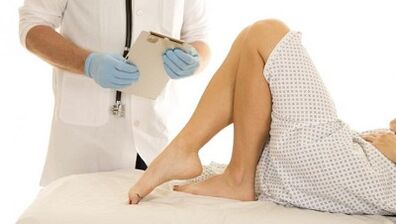
Examination by a phlebologist is the first step in identifying varicose veins.To make a definitive diagnosis, in addition to the mandatory tests, the doctor may prescribe:
- Doppler ultrasound (a method that allows you to evaluate the patency of blood vessels and valves);
- Ultrasound angioscanning, used in the presence of complications.
To obtain information in different situations, phlebography (X-ray contrast, three-dimensional computer) and phleboscintigraphy are also used.The listed methods are used in some cases that require additional surgical procedures.
Stages of varicose veins
According to the classification of the academician, there are 3 stages (grades) of varicose veins of the lower extremities: compensatory (1), subcompensatory (2) and decompensatory (3).
Initial phase: compensation
The first stage of varicose veins can develop over several years.The disease has no age or geographic limitations: the disease is detected among residents of different countries, regardless of the age of the patients.
The signs that appear are often attributed to symptoms of other diseases.Changes cannot be determined visually.
With the help of adequate therapy, relief of the initial stage of varicose veins occurs in a relatively short time.
Second phase: undercompensation
The duration of the period can reach several years (its duration depends on the lifestyle, type of activity and general well-being of the patient).
With 2nd degree varicose veins, a visually pronounced deformation of the vessels is noted;specific symptoms begin to appear much more often, and prolonged rest is necessary to reduce their intensity.
The subcompensation phase is detected in most patients who consult a doctor.With a timely visit to the clinic and carrying out all the necessary manipulations, the development of complications is stopped.
Third phase: decompensation
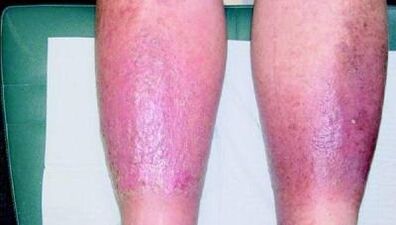
Grade 3 varicose veins in the absence of therapy cause the formation of eczema and trophic ulcers.The latter occur mainly on the internal surface of the legs (less often on the back, above the ankles) and are characterized by an irregular shape, a flat bottom and the presence of purulent contents.Individually located.
The walls of the blood vessels affected by the disease lose elasticity and strength and are often damaged.Ruptures are accompanied by bleeding, which rarely stops on its own.
In the third stage of varicose veins of the lower extremities, erysipelas may develop in the affected areas.The disease is aggravated by complications such as:
- venous thrombosis;
- thrombophlebitis;
- lymphangitis.
At stage 3 of varicose veins, changes begin to affect the entire body: a weakening of the immune system and the musculoskeletal system is observed, and alopecia may occur.
Treatment of varicose veins depending on the stage
The choice of treatment method depends on the stage of development of the pathological process.Advanced disease requires radical relief measures.
Treatment of varicose veins in the initial phase
Varicose veins of the first degree are suppressed using drugs, venotonics, creams, a complex of massages, sclerotherapy (injection of a special agent into a vein) and ozone therapy (a method that strengthens blood vessels).In addition, you can use traditional medicine recipes.
It is forbidden to use drugs, decoctions and infusions of medicinal herbs independently (without consulting a doctor): non-systematic therapy will only worsen the condition.
Among the drugs prescribed:
- medical products that stimulate blood flow in the veins;
- agents that increase vascular tone.
The dosage is calculated individually, depending on the patient's condition.
Among the auxiliary methods of conservative treatment of varicose veins is the use of medical hosiery (stockings, tights, golf) and elastic bandages.
The use of the latter prevents the development of deformities and helps to reduce the load on the vessels of the affected area when walking.They are applied after sleep (at night), in a lying position;wear all day.They are removed only in the evening, before rest.
Compression garments improve blood circulation and support weakened vascular walls.
At home, you can use cold foot baths to relieve fatigue and reduce discomfort.
Relief from form 2 disease
The principles of drug treatment of varicose veins at stage 2 are similar to the treatment of the first stage of the disease.It involves the use of antithrombotic agents, venotonic agents and the use of compression garments.
Popular drugs that reduce swelling include ointments and liniments.
Surgical procedures include radiofrequency therapy and laser coagulation.The first of these methods allows you to remove the vascular pattern and is used if patients have a history of asthma, ischemia and other serious diseases.
Radiofrequency obliteration under ultrasound control is performed when the trunks of the great and small saphenous veins are damaged and helps to eliminate varicose lymph nodes.
The main recipe of traditional medicine is the use of compresses with blue clay.To obtain a medicinal mixture, 2 tbsp.the.sedimentary rock is diluted in 1 glass of water.The resulting substance is applied to the damaged areas and fixed with a napkin.The affected area is also wrapped in a warm towel.The minimum duration of treatment is two hours.
Methods of suppressing stage 3 of the disease
Treatment of grade 3 varicose veins involves surgical procedures.These include phlebectomy (removal of the affected vessel), used in the presence of ulcers and blood clots.There are classic and laser implementation methods (not accompanied by incisions).
At the end of the operation, drug therapy is prescribed and the use of compression stockings is recommended.
Disease prevention
The list of rules preventing the possible development of varicose veins includes three main points: following the principles of a healthy lifestyle, avoiding tight clothing and uncomfortable shoes, and visiting a doctor in a timely manner.
To prevent the disease, it is advisable for pregnant women to use a properly selected bandage, tights or compression stockings.
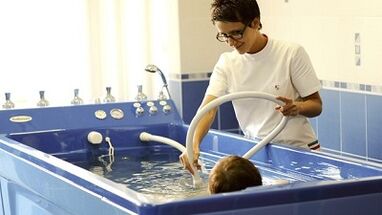
During rehabilitation, you need to adhere to a healthy diet, perform the recommended set of exercises, take a contrast shower and regularly undergo prescribed examinations.
And the most important thing: at the first suspicion of the development of the disease, you should immediately seek help from a phlebologist.Varicose veins identified at the early stage can be completely eliminated without harm to health.